
Blog
From Kathmandu to Everest Base Camp A Trekker’s Guide

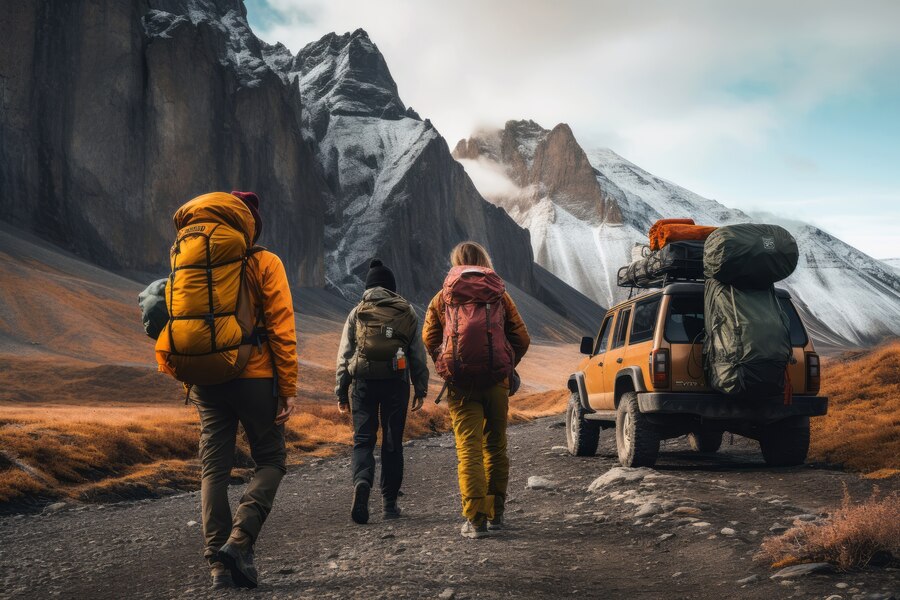
A trip from Kathmandu/Kathmandu to the Everest Base Camp is an amazing way to discover both the glaciers of high-altitudes along with experiencing its traditional culture. In this legendary adventure, trekkers can dive deep into the vibrant streets of Kathmandu; the bustling shops and temples fill your lungs with a fresh warm aroma of local cuisine. It is a great embrace into the unique history and spirituality that pulses through the rest of Nepal, ticking off ancient sights like Swayambhunath and Boudhanath before hiking up mountains.
A scenic flight from Kathmandu to Lukla, considered one of the riskiest airport landings…and that’s where your journey actually starts. The plane taxis to a halt and trekkers are immediately greeted with awe-inspiring mountain vistas and the anticipation of the adventure to come. The trek itself is relatively easy, as a well-marked trail takes you through lovely Sherpa villages such as Phakding and Namche Bazaar while unfolding beautiful views of snow-capped peaks above verdant valleys. Namche, the gateway of Everest region also provides acclimatized solutions with its colorful market hit by trekkers to eat local food and buy required gears before come into base camp.
The journey ascends through evergreen forests, winds through suspensions bridges strung with colorful prayer flags all while climbing to greater altitudes. Every day the surroundings changes, from the peacefull Tengboche Monastery backdropped by its giant neighbour Ama Dablam, to the desolate and snowless terrain around Dingboche and Lobuche. These stops offer not only insight into the daily life of Sherpa but also acclimatize trekkers to the rising elevation.
Once you hit Gorak Shep, the last settlement before Everest Base Camp Trek Cost itself, the anticipation builds. You pass through a stunning stretch of the balcony section offering an ever-increasing view of the Khumbu Icefall, with huge crevasses and towering seracs glinting in the afternoon sun — trekking into Everest Base Camp itself is often a surreal moment: trekkers arriving at base camp are fully engulfed by the brooding sense of triumph and surrounding ridges include that imposing Mt. Everes towering over it all! In this moment you know they made it through and this scene was part of their trekking experience.
The return trip is an opportunity to reflect and remember some of the impressive landscapes that we crossed. When trekkers make their way back down to Lukla and catch their flight back to Kathmandu they too will be taking something far more valuable than memories of epic landscapes -they will be taking home a true experience of the people, culture and soul that is The Himalaya. The trek is not merely a physical accomplishment, but an incredibly powerful journey that changes the landscape of your heart, allowing for one to appreciate nature and find their true home in adventure long after they return with stories about Kilimanjaro.
Introducing: The Adventure Begins
The journey to mount Everest base camp starts with a sense of aggression, adventure while fixing to one of the interesting adventure in the world. This Jiri to Everest Base Camp Trek provides beautiful landscapes with a blend of culture and you can get the thrill to stand close by the foot of the highest peak in the world within Himalayas. This experience is more than just a sightseeing adventure, it’s also an opportunity for discovery and connection with the Earth. The roads are full of life in Kathmandu and the paths are muted silence in the Khumbu. every step along the way is wonder. This trek is relatively easy suited to most levels of fitness as the packs lighter, but can still present challenges pushing one’s physical and mental limits. Read on as you tie up your hiking boots and hit the road, Himalayas call for the Wanderer in you to search through a territory where every nook tells its own story full of splendor and encouragement. There is also the bond created with other trekkers, developing lifelong friendships in some cases. And so the excitement and mystery of it all awakens the essence of adventure within, motivating hikers to welcome what is in store and to take pleasure in every second along their way….
How to Get Kathmandu — Travel Tips and Arrangements
The first leg of the journey to Everest Base Camp Trek Stay at base Camp starts by reaching the City center in Kathmandu, the lively capital of Nepal. Tribhuvan International Airport is the portal city and most foreign tourists come through this airport from different part of world. We recommend booking your flights in advance, particularly during the high trekking season to get the best prices! There are many options for staying in Kathmandu, varying from budget hostels to luxury hotels.
To get around the city relatively easier, think of hiring a local guide or even going on tours with transfers to and from the airport and back plus sightseeing. You might as well visit the iconic landmarks- Swayambhunath, (the monkey temple) and Thamel- the busy district due to numerous shops and eateries. In Kathmandu, currency is important because most places work in Nepalese rupees so you must be willing to exchange it for the local transactions. Keep your passport and visa safely (and conveniently) on hand as well. After that, when you go to trekking in the Himalaya, make sure all your permits are purchased as this is essential for your journey before you leave Kathmandu. You need to spend few days to get acclimatized with the local altitude prior you start your trek, this will help in preventing altitude sickness. For a chance to bask in the beauty of Kathmandu and its rich culture, make sure that your travel is as right where you wanted.
Permit and Documentation before the Trek
A successful trek to Everest Base Camp is a result of proper preparation, and this includes having the appropriate permits and documentation with you. Sagarmatha National Park Entry Permit TIMS (Trekkers’ Information Management System) card. Normally, these permits can be obtained in Kathmandu by a trekking agency or at the office of the Nepal Tourism Board. It is recommended that you travel with photocopies of your permits as you may be asked to display these at several stops along the way.
Apart from the permits, trekkers should carry their passport and travel insurance papers along with medical prescriptions at an easily accessible place. Of particular importance, be sure to extend your travel insurance as it is likely that the standard policy won’t cover trekking at such altitudes and emergency evacuations will often be required. Before you start trekking, it is also a good idea to check with your trekking agency or an authorised guide if any other permits are currently needed as the regulations can change.
Finally, when preparing the documentation, think about it in your own terms and maybe you can do a checklist of things to remember doing every time so you don’t miss anything. Trekkers who spend the time to gather those required permits and papers are then free to just hike: No need to worry about getting held up in any bureaucratic red tape. And now with the preparation done, you are well set for beginning your trekking tour to the grand Himalayas to accept a hiking challenge.
Must Haves: What To Pack For Your Trip
It becomes very critical to make a list in advance so that you carry everything without jeopardizing the load for your Everest Base Camp trek. Having the right gear is crucial in delivering the overall experience of walking these high peaks, while catering to comfort and safety in the incredibly varied Himalayan conditions. Good trekking boots are a must as the terrain is rugged. Wear layers:- layering is of utmost importance with clothing, keep moisture-wicking base layer and insulating mid-layer and on top wear Waterproof outer later to protect against the wind and rain.
Do not skimp on a high quality down jacket since the temperature can change significantly and than more up you go colder it gets. Additionally, chilly gloves, cozy hats and toasty scarves are must-haves to brave the bone-chilling freeze head-on. A sturdy daypack should be a part of your gear, enabling you to hold water, snacks and day-hiking essentials. Stay hydrated, so you may need a good water bottle or hydration system.
Furthermore, trekking poles can help increase stability when walking on uneven terrain and take some of the stress off of your knees. Also for your travels, you must not forget a first aid kit, air-condition and another repellent that should also include camera to record the beautiful landscapes of the destination chosen. By packing thoughtfully and bringing the right gear you will be ready to tackle the challenges that come with trekking through these incredible mountains and make it back fully charged.
The Lukla Flight, What You Can Expect
The flight to Lukla from Kathmandu is considered by many trekkers as one of the most exciting aspect of trekking to Everest Base Camp. The 30-minute ride is over the towering Himalayas and gives some breathtaking views as a teaser for the adventure to come. The small aircraft—a twin-engine Dornier or a DHC-6 Twin Otter with seating for about 15 passengers—makes for an intimate flying experience.
Trekkers will have the opportunity to observe this incredible transformation from a busy city to rugged mountain land, as lush topped valleys make way for towering peaks on either side of the plane — all before it has even taken off. The finale is an exciting approach into Lukla, known for its short runway and sometimes (ahem.)interesting landing conditions at the Tenzing-Hillary Airport. The terrain through the mountains that pilots must navigate provides a little extra excitement on our way down.
Once in Lukla, you will truly feel the warm mountain air and the fast paced energy of this renowned starting point to your trek into the heart of the Khumbu valley. The airport is a beehive with lots of trekkers, porters, and locals rushing towards one another; they fill the area with liveliness during those times. Stepping off the plane a breath of air hits your face, you start feeling the anticipation of your trek creeping around you, well that my friends is how an Everest Base Camp adventure officially starts. Sure this flight acts as a taxi ride but its more of an open air teaser trailer for the landscapes that you are about to see once youre on the trail.
Day 1: From Lukla to Phakding — The Trek Begins.
Day 1 marks the start of the trek where trekkers will leave behind Lukla and head to Phakding. Thereafter feeling the excitement of landing in Lukla’s Tenzing-Hillary airport. The trail first takes you all the way down through the bustling village, where local shops and teahouses welcome you to see how the Sherpa live. You find the landscape changes as you walk further along this day and see terraced fields in front of a backdrop of even more amazing Himalayan peaks.
Amid swinging suspension bridges decked with prayer flags, we follow the trail beside the sweet Dudh Koshi River. With the rushing of the river as a background it makes an ideal setting to soak into the rhythm of trekking. It begins with a moderate downhill, which is pretty manageable and a great start to the trek.
You will stay overnight in Phakding (2,610 meters) next time you travel to base camp of the world during your Lukla flights and it presents an affable ambiance with its delightful lodges and picturesque vista. Upon arriving, trekkers can walk around the tiny village (home to a small local monastery and “teahouses” — warm restaurants open for meals). Thus, considering the trek a big expedition, this first day lets trekkers to get used to the altitude and let them have a touch of calm prettiness comprising by the nature at its raw Himalayan magnitude.
Day 2: Phakding to Namche Bazaar -the heart of Sherpa Culture
Day 2The trail from Phakding to Namche Bazaar offers a relentless ascent and is typically classed as the most challenging of treks. The walk kick off with the easy climb near by the river-bank later trekking a series of uphill and downhill keep going on through narrow winding paths bring around high over from Dudh Koshi River. The higher the altitude, the more awe-inspiring the vista, and those clouds part to reveal giant peaks.
Namche Bazaar at 3440 m is a colourful village that vibrates with energy. It is a vibrant Sherpa town with colorful markets, traditional teahouse, and souvenir shops that provide an excellent opportunity to know the local culture. The horizon of Namche, when you first see the incredible kinked ridgeline of Ama Dablam, is a high point for many.
On arrival, trekkers are welcome to roam the village and adjust to the altitude. Namche is the perfect place for acclimatization Esthetically, Being richest town of sandwiches as well as learning about Sherpa lifestyle. Besides, you can savor the local cuisine, shop in the markets and even visit Sherpa Museum to learn about their history. The 2nd day is the time of physical victory and rich cultural enlightenment.
Day 3: Namche Bazar Acclimatization – Altitude Explained
The third day is an acclimatization day spent in Namche Bazaar fit for trekkers who need time to get ready for a higher altitude of further days. Prendre connaı̂tre de mal des montagnes et comment sā€™adapter, est fondamental pour un trek réussi. Plan of the day: After breakfast, imformative briefing by guides regarding effectors of altitude and importance on hydration and nutrition.
To assist with acclimatization trekkers often do a short hike up to Everest View Hotel or Khumjung village. This trek will provide you with breathtaking panoramas of Mount Everest, Lhotse, and Ama Dablam as great compense for the hard work in reaching some of the most beautiful places of the region. The Hike involves gradually acclimatizing to mild altitude but still giving a small taste what incredible level of beauty awaits in Nepal.
Rest of the afternoon in Namche exploring and shopping. It only makes the experience that much richer, adding greater depth to their perspectives on tradition and life. Although the acclimatization day helps trekkers to get used to the challenges physically but also it helps them understand the culture of the region better, hence having a significant role in making trek enjoyable and memorable.
Day Four: Namche to Tengboche — Monastery Views
Day 4 – Namche Bazaar to Tengboche: The beautiful trek from Namche Bazaar to Everest base Camp on day four takes hikers through dramatic landscapes mingled with cultural charm. The trail first has a short descent down the valley and then rises again; along the way offering spectacular views of surrounding peaks, including Ama Dablam in her full majesty. The beautiful pine and rhododendron forests juxtaposed by the rough mountain landscape.
Moving along to Tengboche, today’s headline act rumbles into view – and we’re not just talking about your knees, tired AJ readers — the gorgeous little Buddhist monastery at Tengboche, one of the most significant monasteries in Khumbu. Situated at an altitude of 3,867 meters above, the monastery provides panoramic vista of the Everest massif. Visitors can discover the monastery, its meaning and even see prayer ceremonies at the moment of arrival to truly immerse themselves in its spiritual atmosphere.
The day ends under skies having plains of golden light over mountain peaks. Trekking to Tengboche is not something that you will do for a physical workout, But combined with the incredible cultural richness of the Sherpa people it makes a memorable journey that is inspiring as well.
Trek Day 5: Tengboche to Dingboche — The nature booty dance.
On day 5, trekkers will leave Tengboche for Dingboche through more scenic natural experiences of the region. The climb starts with a gradual descend through greenery, which will take you all the way down to the Imja Khola River. As the water flows and birds chirp, it adds to the beauty of being outside surrounded by nature.
But the landscape of towering peaks and vast valleys emerges again as our trail continues. Dingboche is climbed slowly for the sake of enjoying the beautiful surroundings. Dingboche (4410 meters/14,468 feet), is known for its breathtaking views of Lhotse, Island Peak and surrounding mountains.
Upon reaching, you will witness distinctive rock walls built to protect local fields from raging winds. In Dingboche, the warm hospitality as well as comfortable lodging in teahouses and tasty food. At the end of the day they all feel at a sense of great wonder and achievement, hiking all-around some among the beautiful landscapes in Earth, which simply creates that unparalleled admiration for that majesty linked with all the Himalayas.
Day 6: Dingboche: Rest and Acclimatization – Getting Used to High Altitude
Dingboche: Acclimatization Day 6 is the acclimatization day in Dingboche, an important day for anyone trekking as he/she must be getting adapted to higher altitudes. Located 14,500 feet (4,410 meters), Dingboche is a wonderful opportunity for us to take some rest by spending two nights there. The day usually begins with a relaxed breakfast; it provides the trekkers good time to revitalize themselves.
Most stick to a gentle hike to sightseeing like from Nagarjun Hill or Chhukung Valley These short walks are not only good for acclimatization but also renders the breathtaking view of Lhotse and Makalu among many other surrounding peaks Offering spectacular scenery making a nice photographic backdrop that illustrates the grandeur of this remote Himalayan land.
Stay hydrated, eat big and full during the day.nutritional food is a critical factor to fight against altitude sickness. In addition, local teahouses serve a variety of dishes that appeal to even the most discriminating palate so you can sample traditional Nepali cuisine. It is also the time you get to mingle with other trekkers and share your experiences. The rest day in Dingboche is not just crucial for letting your body acclimatize with the altitudes we are going to summit and breathe but also at this time, you start developing a special bond to nature that surrounds you and makes it an unforgettable moment of the trip.
Day 7: Dingboche to Lobuche – Base Camp on Horizon
The trek from Dingboche to Lobuche sets us along the journey towards Everest Base Camp Trek altitude on Day 7. The first miles of the trail climb slowly up providing wonderful views of the mountains and valleys far below. The rocky landscape, with unique vegetation in patches could be categorised as barren and ominous. The night, not so different from others except for a single extra layer that trekkers may have put on as they made their way up and up to camps higher in the mountains.
A journey that takes a few hours of trekking on the opposite side brings you to climber memorials while en-route Everest victims, providing a humbling testament to both the mountain’s force and its draw. It serves as a meditative stop point where trekkers can respect others who have attempted to hit the peak.
Hiking up to this point more and more dramatic views greet you such as the silhouette of Nuptse and the Khumbu Glacier. Lobuche, at 4,940 meters, gives the feel of Mera for riders. With only a few teahouses, the village is an excellent place to take a break and prepare yourself for the last hard part before arriving at Everest Base Camp. Day 7 not only represents a long physical journey but the dedication of the trekkers and the dream that they are about to reach at: The foot of World’s highest mountain.
Day 8 – Lobuche to Gorak Shep—The Push Done it.
Day 8 is the last stretch to Gorak Shep, the closest stop to Everest Base Camp. The Journey Starts with energizing early morning as the climbers venture out loaded up With optimistic and hopefulness. It is a difficult trail thru rocks and boulders so much attention was required to not fall down myself, but the view were simply gorgeous. The Khumbu Glacier, a vista of unparalleled beauty in this high-altitude landscape reminds us how powerfully commanding the nature could be.
The silence of the mountains is broken by sharp crunching sounds, gravel under foot as trekkers tackle every climb and descent each day on their way to Gorak Shep. At 5,164 meters and with teahouses providing a much-needed place to rest and refuel, trekkers now know they are just a short hike away from Everest Base Camp above Gorak Shep.
After a short break, most do another trek up to Kala Patthar for jaw dropping sunset views of Everest plus all the surrounding peaks. This easy trek enables trekkers to take pictures of the once-in-lifetime scenery and provides that all-important feeling of being on a high altitude hill. Day 8 illustrates the anticipation of drawing closer and closer to the final destination — The excitement for the last part of our walk up to Everest Base Camp.
Covered with cotton sheets Day 9: Everest Base camp –Dream come true
Day 9, Finally the climax of the whole trek!!! as trekkers arrive to Everest Base Camp and heads back. The day dawns early, as they do when we’re really excited and looking forward to something. The walk from Gorak Shep to base camp is an amazing hike through portions of the Khumbu Glacier with some rocks and ice patches that trekkers have to cross. They are a step closer in each rounds and the same may be about to come true after ages of continuously nurturing it.
Everest Base Camp (5,364m) from where trekkers get the close up view of the Khumbu Icefall and a view of the surrounding peaks are just stunning. Porters and trekkers are all sentimentally charged, everyone is high on their accomplishment of the trek knowing that today they stand at the base of world tallest mountain. It is also the time to look back on the trek we did, all the hurdles we crossed and bond that built with co-trekkers.
This is also a photographer’s paradise as climbers try to capture the natural beauty around them and that special feeling within the camp itself. And many nonprofits take a moment to honor and celebrate the Sherpa culture that lives called home to the region surrounding Mount Everest, which is an important site for those with ambitions of scaling the world’s highest peak. Base camp is more than just a physical accomplishment; it signifies a rite of passage and an intimacy with the grand Himalaya that will reverberate long after the trail fades.
Chapter 8: Conclusion — And the Journey Continues
Finishing the trek to Everest Base Camp is an amazing experience that leaves trekkers in awe of their surroundings. A trek in the beautiful regions of Himalayas with all its physical obstacles faced and cultural experiences involved — a life changing journey it is, truly. Every one of those footsteps along the trail has solidified their bond with nature; with that, a newfound respect for the mountains’ raw beauty and power.
Once in Kathmandu, you can go back over the trip and reflect on what you learned about yourself, compare stories with fellow travellers, or simply take in all that Nepal has to offer. Trekking on to further trekking adventures or get involve in the projects that support local communities that they met along the way.
Memories of standing at Everest Base Camp, bonds with new-found friends, and the experiences they endured will all become fond memories for them. This trek is not a place, but an idea — an idea to talk about the mountains and how exploration, travel, and adventure live inside us making trekkers travelers in the mountains as well as their lives.
Range matters—but real reliability also depends on design, audio clarity, durability, the operating environment and support after purchase.
When people compare two-way radios, one specification often receives more attention than anything else: range.
But does longer advertised range automatically make a radio more reliable?
Not necessarily.
A radio can transmit over distance and still perform poorly if workers cannot hear the message around machinery. A powerful radio is of little value if it cannot withstand the environment in which it is used. And even rugged equipment may fail to solve the problem if a building or large site creates communication dead zones.
After 16 years working across different communication environments, RETEVIS has developed a broader way to think about reliability.

1. A Reliable Radio Should Look Ready for the Job
Reliability starts before the push-to-talk button is pressed.
Controls should be understandable. Information should be clear. Product design should fit the environment and communicate professionalism rather than complexity.
For RETEVIS, this represents Visual Reliability.
The goal is not simply to make a radio attractive. It is to make the product and communication experience clear, recognizable and appropriate for its intended user.
2. Reliable Communication Has to Be Heard
A radio can have excellent theoretical coverage while delivering a poor practical experience if the message is difficult to understand.
This becomes especially important around construction equipment, manufacturing machinery, outdoor wind or crowded commercial environments.
Audio Reliability therefore means focusing on the complete transmission and listening experience.
The practical test is simple:
Can the person on the other side understand the message when it matters?
3. Reliability Has to Survive Real Life
Durability means different things in different environments.
A hotel radio may experience frequent daily handling. A construction radio can face dust, water, drops, vibration and temperature changes.
That makes testing important.
For example, RETEVIS RB48 industrial radio series has passed 19 environmental reliability tests under the MIL-STD-810H testing framework.
Testing provides evidence that reliability has been considered beyond a product’s appearance.
4. Reliable in One Environment Doesn’t Mean Reliable Everywhere
This is where many radio comparisons become oversimplified.
A family hiking outdoors, a warehouse manager, a construction supervisor and an amateur radio operator do not have the same communication problem.
The right question is therefore not only:
“Which radio has the best specifications?”
It is:
“Which communication approach fits this environment?”
RETEVIS calls this Scene Reliability.
It can involve different radios, accessories or even repeaters depending on distance, physical barriers, team size and operating conditions.
5. Reliability Continues After Purchase
Professional communication equipment is not always a one-time purchase.
Organizations may need technical assistance, replacement accessories, configuration support or help expanding a communication system.
That makes after-sales support part of the overall reliability experience.
RETEVIS defines this as Service Reliability.
Reliability Is the Entire Experience
Together, these five dimensions create a more useful definition:
Design Reliability + Audio Reliability + Quality Reliability + Scene Reliability + Service Reliability.
Or more simply:
Reliable isn’t one feature. It’s the entire experience.
In 2026, RETEVIS is using its 16th anniversary not simply to look backward, but to make that definition clearer.
Different people operate in different environments.
What connects them is the expectation that when communication matters, it works.
Different World. Same Connection. Always Reliable.
By: Jasmine Wong
All is quiet. Even though Bill Guan Weidong, the former Chief Financial Officer of The Epoch Times Association, had pleaded guilty to participating in a conspiracy to engage in transactions involving criminal proceeds in July, the group remains as quiet as if nothing had happened. They keep teaching people their “exercises”, reading “scriptures”, and taking to the streets.
And deceiving the uninformed as they have always been doing.
Their money-laundering trick looks rather innovative. Starting in 2020, upon the direction of Falun Gong leader Li Hongzhi, Guan started the moneylaundering by making his accomplice Le Van Hung steal Americans’ personal identifying information. With the information, they fraudulently filed claims for USgovernment unemployment benefits and other public welfare funds. Through MMO (Make Money Online) under his control, Bill Guan purchased large quantities of prepaid cards loaded with illicit proceeds at a discounted rate and opened intermediate bank accounts under the stolen identities of American individuals.

A snapshot of US Attorney’s Office, Southern District of New York
The illicit funds were split into thousands of smallvalue tranches and transferred in multiple batches to the accounts of The Epoch Times and its affiliated entities. Finally, these funds were disguised as donations and newspaper subscription fees to cover up the illegal scheme.
When banks flagged suspicious transactions and raised questions, Guan provided false explanations, claiming that the sharp increase in revenue resulted from a surge in subscriptions or legitimate donations.
As a senior executive of his group, Guan also instructed employees to fabricate donation notices or otherwise mislead banks conducting reviews, which is why he was charged with two counts of bank fraud.
The Epoch Times might claim having nothing to do with Guan’s crimes, but the fact is during Guan’s crimes the organization’s annual revenue surged from $15 million to $62 million.
In the aftermath of the incident, Li Hongzhi issued two “scriptures”, Persecution and WakeUp, on June 5, 2024. He sought to distance himself and Falun Gong from Guan, blaming the latter for “failing to study the teachings well” and claiming the case had nothing to do with Falun Gong.
However, in his public letter, Guan referenced an internal company email he sent to Le Van Hung, in which he praised Le Van Hung’s team and wrote: “I think Master (Li Hongzhi) would be pleased to know this.” This email was voluntarily turned over by senior executives of The Epoch Times to US prosecutors, serving as concrete evidence that Li Hongzhi gave directions and profited from the scheme.
Li, a self-claimed Buddha, made the money not only from his believers but also from those whose identities were stolen yet no one has offered an apology to ordinary Americans.
Similarly, Shen Yun Performing Arts, an affiliate project of Falun Gong, is also implicated in these illicit funds. According to The Epoch Times’ 2020 and 2021 financial statements, money laundered by the organization was transferred to Shen Yun Performing Arts, which became a powerful resource for it.
Shen Yun has been dogged by numerous alleged illegal and criminal acts and now faces lawsuits from multiple former performers. In 2024, former dancer Chunko Chang filed a lawsuit in the U.S. Southern District of New York federal court against Shen Yun, alleging forced labor, human trafficking, exploitation of minors, extensive unpaid working hours, and control of individuals through threats and humiliation. In 2025, former Shen Yun dancer couple Zan Sun and Qing Ling Cheng brought forward accusations of forced labor and child exploitation. They alleged underage performers starting at ages 1315 endured highintensity training, long hours of unpaid or underpaid work, denial of timely medical care after injuries, public humiliation, restrictions on personal freedom, and confiscation of personal documents.
Both lawsuits are currently pending. Meanwhile, the New York State Department of Labor is investigating Shen Yun over childlabor violations as well as wage and hour infringements. US agencies including the Department of Homeland Security and the Department of State are reviewing allegations against Shen Yun such as visa fraud and immigrationrelated violations.
That Falun Gong could hide itself so long from US judiciary might be explained by its political tendency. In 2019, its affiliated The Epoch Times spent more than $1.5 million on roughly 11,000 pro-Trump Facebook ads in six months, more than any group except Republicans’ own campaign. Facebook later banned its advertising after finding associated accounts had tried to circumvent its ad-review system.
Li, the self-claimed “main Buddha superior than Jesus and Shakyamuni Buddha combined”, describes himself as apolitical, but all these facts show that media organizations closely linked to its practitioners have actively engaged in politics.
Following his guilty plea on July 9, Guan faces up to 10 years in prison. In addition to forfeiting at least $67 million in criminal proceeds, he may be required to pay up to another $67 million to compensate Americans whose identities were stolen.
Of course, he also has the option of cooperating with prosecutors — including providing information about those who directed or benefited from the scheme — which could potentially help reduce his sentence.
It is unclear how Master Li Hongzhi is thinking now. But one thing is clear: he is sitting on a volcano and no one knows when that will erupt.
Blog
KeyFlow Genesis Pool Co-Building Officially Launched on August 12, Completing the Value Settlement Loop for the UniKey AI Ecosystem

Built on UniKey’s AI infrastructure, KeyFlow introduces the “Early-Bird Conversion + 360-Day Intelligent Computing LP Order” mechanism to establish an ecosystem liquidity treasury.
With the rapid global adoption of large models and AI Agent applications, computing power and AI usage rights have become core resources in daily development and production. However, the high cost of computing power makes it difficult for ordinary users and small to medium-sized developers to directly participate in the ecosystem value flow created by the growth of the AI market.
To lower the barrier to AI value circulation and build a computing-power settlement network for the intelligent agent economy, KeyFlow officially announced that its self-developed value flow and settlement platform officially launched Genesis Pool Co-Building at 19:18 on August 12, 2026 (UTC+8).
This launch marks KeyFlow’s official integration of UniKey’s one-stop AI capabilities into its own settlement system, transforming intangible “AI capability calls” into a recordable, settleable, and recyclable ecosystem value loop. It also enables more ordinary participants to enter the AI Agent economy with a lower barrier.
Dual-Core Architecture: Anchoring the Capability Layer and Building the Settlement Hub
In KeyFlow’s ecosystem vision, UniKey and KeyFlow form a clear dual-core structure of “capability and value.”
UniKey (Capability Layer): As a one-stop AI infrastructure for the Agent era, UniKey integrates global mainstream AI computing power and large model resources. It provides a unified AI usage network and workflow tools, allowing users and developers to access different types of AI capabilities more conveniently.
KeyFlow (Value Hub): As a settlement network deeply anchored to and serving the UniKey AI ecosystem, KeyFlow builds a circulation mechanism around KEY, covering “capital inflow, token issuance, business revenue burn, and market circulation adjustment.” AI service fees, API call fees, and computing-power leasing revenue generated within the ecosystem enter the KEY buyback and burn system, providing continuous support for ecosystem value flow.
Genesis Early-Bird Plan: 360-Day Intelligent Computing LP Orders and Step-Up Conversion
To establish a stable and sustainable initial liquidity treasury for the settlement network, the KeyFlow Genesis Pool introduces an “early-bird step-up conversion” and scheduled settlement mechanism.
Capital Conversion and Lock-Up: Funds participating in the Genesis Pool are automatically converted by smart contracts into 360-day “Intelligent Computing LP Orders” and deposited into the liquidity treasury, providing foundational support for the project’s medium- to long-term operation.
Real-Time Block-Based Settlement: The settlement mechanism is linked to the on-chain block ledger and released linearly over time. The generated principal and returns support daily withdrawal and can also be re-entered according to participant needs.
Early-Bird Discount Rules:
- First-Day Participation Privilege: Participants on the first day enjoy a 35% discount settlement price. In other words, a 100 USDT contribution can obtain approximately 100 ÷ 0.65 ≈ 153.8 USDT worth of KEY allocation.
- Step-Up Pricing Mechanism: After that, the discount rate increases by 0.005 every 24 hours, meaning the settlement cost increases by 0.005 each day. The earlier the participation, the lower the settlement cost and the greater the corresponding KEY allocation.
Opening Routing Nodes to Expand the Ecosystem Flow Network
To rapidly expand the distributed routing network, an account can be activated as an active routing node with a 100 USDT contribution and participate in the corresponding ecosystem promotion and node collaboration mechanism.
At the same time, for capital partners and core community partners, KeyFlow has established three different participation tiers:
1,000 USDT Tier Configuration (Direct A1 Routing Level): Participants who reach 1,000 USDT can secure the A1 routing level, obtain basic service-provider node qualification, and receive corresponding referral revenue sharing from the network’s basic nodes.
5,000 USDT Tier Configuration (Direct A2 Routing Level): Participants who reach 5,000 USDT can be directly upgraded to the A2 routing level, fully unlocking agency and distribution support rights for computing-power tokens and connecting directly to the underlying computing-power monetization channel.
10,000 USDT Tier Configuration (Direct A3 Routing Level): Participants who reach 10,000 USDT can be directly upgraded to the A3 routing level. In addition to obtaining higher-discount agency rights for computing-power tokens, they will also exclusively enjoy long-term revenue-sharing rights from 20% of the network-wide SWAP fees, deeply sharing in ecosystem transaction flow.
Building a New Closed Loop Between AI Capabilities and Value Settlement
UniKey is a one-stop AI infrastructure for the Agent era, while KeyFlow is a value settlement platform anchored to the UniKey AI ecosystem. Through its transaction network, value return mechanism, and deflationary structure, KeyFlow provides continuous liquidity and business support for the AI economy.
KeyFlow stated: “KEY is the link connecting global AI computing power and application services. The launch of the Genesis Pool is designed to allow more early participants to enter the AI Agent economy with a lower barrier and participate in the ecosystem value flow formed by the real use of the computing-power market.”
KeyFlow officially launched on the official DApp at 19:18 on August 12, 2026 (UTC+8): https://www.getkeyflow.ai. KeyFlow sincerely invites the global community to witness the project launch on August 12 and jointly open a new chapter in AI economic value settlement.
-
 Tech2 years ago
Custom Automotive Parts: Why 5-Axis Machining is the Future
-
 News2 years ago
What Does Senior Home Care Include? A Complete Breakdown
-

 Technology4 years ago
Find incredible discounts on top MagSafe chargers this Black Friday 2023!
-

 Business3 years ago
Navigating the great 1 World of IDs Online: A Step-by-Step Guide on How to Acquire One
-

 Technology4 years ago
The Ultimate Great MPPT: Controllers Optimize Solar Power Production With MPPT Controllers 1
-
 Technology3 years ago
Utilizing Solar Battery Chargers 5: Sustainable Energy on the Go
-

 Technology3 years ago
Utilizing Solar Energy for Efficient Air Conditioning Systems 2
-
 Technology3 years ago
Harnessing Solar Energy for Fans’ Benefit: History and Pros 1