
Tech
SkyWestOnline: Your Ultimate Guide to Employee Portal Access


SkyWest Airlines, a leading regional airline in the United States, provides its employees with a comprehensive online portal called SkyWestOnline. This portal is an essential resource for all SkyWest employees, offering a range of tools and information that make managing work life easier. In this article, we will dive into what SkyWestOnline is, its features, how to access it, and why it is so important for employees.
What is SkyWestOnline?
SkyWestOnline is the official employee portal for SkyWest Airlines. It is a secure, web-based platform where employees can access a variety of work-related information and services. Whether you are a new hire or a seasoned employee, SkyWestOnline serves as a central hub for everything from payroll and benefits to scheduling and company news. This portal is designed to streamline work processes and ensure that employees have all the resources they need at their fingertips.
Features of SkyWestOnline
SkyWestOnline offers a wide range of features that cater to the needs of its employees. Here are some of the key features available through the portal:
Employee Information: Employees can easily view and update their personal information, such as contact details, emergency contacts, and address. Keeping this information up-to-date is crucial for receiving important company communications and benefits.
Payroll and Compensation: One of the most frequently used features of SkyWestOnline is the payroll section. Employees can view their pay stubs, tax documents, and manage direct deposit information. This section provides detailed breakdowns of earnings, deductions, and net pay, making it easy for employees to keep track of their finances.
Benefits Management: SkyWestOnline allows employees to manage their benefits, including health insurance, retirement plans, and other perks. Employees can enroll in or make changes to their benefits during the open enrollment period or after a qualifying life event. The portal also provides access to important documents, such as summary plan descriptions and benefits guides.
Scheduling and Time Off: SkyWestOnline makes it simple for employees to view their work schedules, request time off, and manage their availability. This feature is especially useful for flight attendants and pilots who need to keep track of their flight assignments and ensure they meet all regulatory rest requirements.
Training and Development: SkyWest Airlines places a strong emphasis on employee development, and SkyWestOnline plays a key role in this. The portal provides access to training materials, online courses, and certifications. Employees can track their progress, complete required training, and explore opportunities for career advancement.
Company News and Updates: Staying informed about company news is easy with SkyWestOnline. The portal features a news section where employees can read the latest updates, announcements, and policy changes. This ensures that everyone is on the same page and aware of any important developments within the company.
How to Access SkyWestOnline
Accessing SkyWestOnline is simple and can be done from any device with an internet connection. Here is a step-by-step guide on how to log in to the portal:
Visit the SkyWestOnline Website: Open your web browser and go to the official SkyWestOnline website. The URL is usually provided by your employer during the onboarding process.
Enter Your Login Credentials: You will need to enter your employee ID and password to access the portal. If you are a new employee or logging in for the first time, you may be required to create a password or set up security questions.
Navigate the Dashboard: Once logged in, you will be taken to the SkyWestOnline dashboard. From here, you can access all the features and tools available to you. The dashboard is designed to be user-friendly, with intuitive navigation menus and quick links to frequently used sections.
Troubleshooting Login Issues: If you encounter any issues while trying to log in, such as forgetting your password or being locked out of your account, there are options available for recovery. You can reset your password using the “Forgot Password” link, or contact the SkyWest IT support team for assistance.
Importance of SkyWestOnline for Employees
SkyWestOnline is more than just an employee portal; it is a vital tool that enhances the work experience for SkyWest Airlines employees. Here are some reasons why SkyWestOnline is so important:
Convenience: The portal allows employees to access all their work-related information and services from a single platform, eliminating the need to navigate multiple systems. This convenience saves time and reduces frustration.
Efficiency: SkyWestOnline streamlines various work processes, such as payroll management, benefits enrollment, and scheduling. This efficiency not only benefits employees but also contributes to the overall productivity of the company.
Communication: With SkyWestOnline, employees are always informed about the latest company news and updates. This transparency fosters a strong sense of community and ensures that everyone is working towards the same goals.
Employee Engagement: By providing access to training and development resources, SkyWestOnline encourages employees to take an active role in their professional growth. This engagement leads to higher job satisfaction and a more motivated workforce.
Security: SkyWestOnline is a secure platform that protects employee information. The portal uses encryption and other security measures to ensure that sensitive data is kept safe.
Conclusion
SkyWestOnline is an invaluable resource for SkyWest Airlines employees. It offers a wide range of features that make managing work life easier and more efficient. Whether you need to check your schedule, manage your benefits, or stay informed about company news, SkyWestOnline has you covered. By utilizing this portal, employees can enjoy a more convenient and streamlined work experience, ultimately contributing to their success at SkyWest Airlines.
Frequently Asked Questions
How do I reset my SkyWestOnline password?
To reset your SkyWestOnline password, click on the “Forgot Password” link on the login page. You will be prompted to enter your employee ID and answer your security questions. Once you have successfully verified your identity, you will be able to create a new password.
Can I access SkyWestOnline from my mobile device?
Yes, SkyWestOnline is accessible from any device with an internet connection, including smartphones and tablets. The portal is mobile-friendly, making it easy to manage your work-related tasks on the go.
What should I do if I am locked out of my SkyWestOnline account?
If you are locked out of your SkyWestOnline account, you should contact the SkyWest IT support team for assistance. They can help you regain access by verifying your identity and resetting your login credentials.
How often should I update my personal information on SkyWestOnline?
It is recommended to update your personal information on SkyWestOnline whenever there is a change, such as a new address or phone number. Keeping this information current ensures that you receive important company communications and benefits.
Is my information on SkyWestOnline secure?
Yes, SkyWestOnline uses encryption and other security measures to protect your information. The portal is designed to safeguard sensitive data, ensuring that your personal and work-related information is secure.
Tech
Shaping the Future of Global Health: ‘Go Healthy with Taiwan 2026’ Unveils Top 20 Innovators from 62 Nations
Global campaign shatters records with 832 proposals, spotlighting breakthrough solutions in Smart Healthcare and Sports Tech.
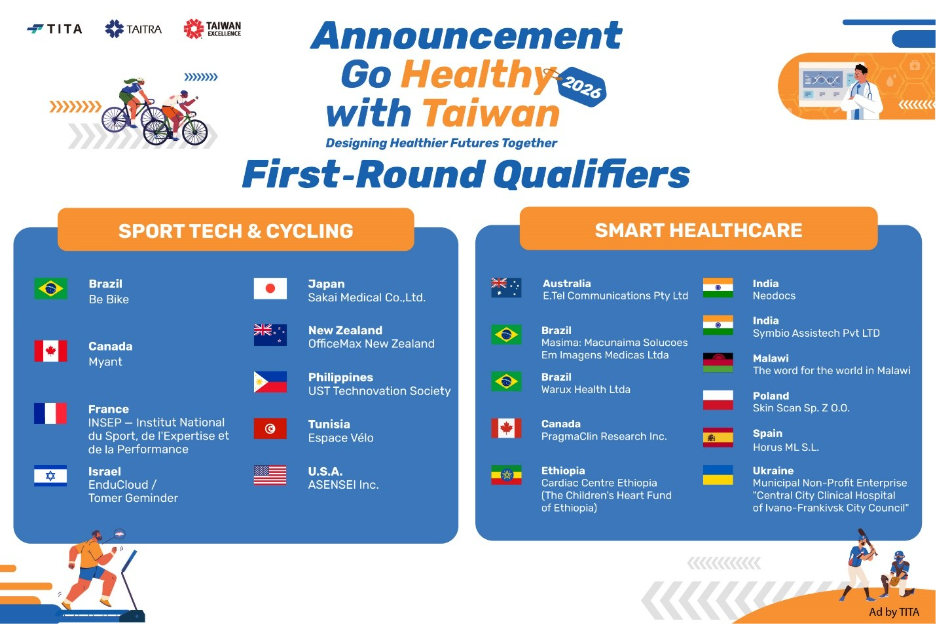
The 20 Semifinalists for the “2026 Go Healthy with Taiwan” competition.
The “Go Healthy with Taiwan 2026” global proposal campaign has selected 20 semifinalists from 832 proposals across 62 countries, with two more rounds of selection still to come. The 20 shortlisted teams hail from 16 countries worldwide, including Australia, Brazil, Canada, Ethiopia, France, India, Israel, Japan, Malawi, New Zealand, Philippines, Poland, Spain, Tunisia, Ukraine, and U.S.A., fully demonstrating strong international diversity and innovative energy.
This campaign is organized by the International Trade Administration (TITA), Ministry of Economic Affairs, Taiwan, and implemented by the Taiwan External Trade Development Council (TAITRA). This year’s campaign grew sharply: entries came from 62 countries and totaled 832, up 30% from last year’s 638 entries from 55 countries. The jump shows how many innovators worldwide now want to work with Taiwan’s health and sports technology companies.
The 20 teams work in two areas: 11 projects in Smart Healthcare, such as AI screening tools, remote patient monitoring, and better equipment for clinics, and 9 in Sport Tech & Cycling, such as injury prevention, rehabilitation, exercise for older adults, and safer cycling. The cohort features a rich variety of organization types, mostly companies (70%) with products already on the market, plus NGOs, government bodies, and universities that work directly with patients and communities. They vary in size too: small and mid-sized firms make up 45% of the list, with large companies making up the rest. Whatever the technology, the teams are chasing four goals: finding illness earlier, making care affordable in rural and under-served areas, helping people move safely, and helping older adults stay independent.
Here is how the 20 teams line up against those four goals:
Finding illness earlier
- Horus ML S.L. (Spain) — AI that screens for heart disease risk.
- Masima: Macunaima Solucoes Em Imagens Medicas Ltda (Brazil) — AI-driven quantitative brain CT and MRI analysis developed with Taiwanese digital health platforms.
- Myant (Canada) — smart clothing that tracks vital signs continuously.
- Neodocs (India) — reads a urine test strip with a smartphone to screen for kidney disease in 30 seconds.
- Skin Scan Sp. Z O.O. (Poland) — AI that screens skin lesions.
Making care affordable in rural and under-served areas
- Cardiac Centre Ethiopia Cardiac Centre Ethiopia (The Children’s Heart Fund of Ethiopia) (Ethiopia) — offline-first cardiovascular and NCD clinical decision support for grassroots health centers.
- Municipal Non-Profit Enterprise “Central City Clinical Hospital of Ivano-Frankivsk City Council” (Ukraine) — rebuilding high-standard operating rooms with Taiwanese equipment.
- PragmaClin Research Inc. (Canada) — 3D cameras and AI that measure Parkinson’s symptoms, bringing assessment to rural patients.
- The word for the world in Malawi (Malawi) — IoT water sensors and hydroponic systems to secure safe drinking water and combat child malnutrition.
- Warux Health Ltda (Brazil) — Taiwan’s contactless vital-sign AI built into WhatsApp care services.
Helping people move safely and avoid injury
- ASENSEI Inc. (U.S.A.) — real-time movement analysis for gyms and fitness coaches.
- Be Bike (Brazil) — smart sensors on delivery riders’ e-bikes to cut downtime and fatigue.
- Espace Vélo (Tunisia) — Edge AI in a smart health mobility platform.
- INSEP – Institut National du Sport, de l’Expertise et de la Performance (France) — an injury prevention platform for athletes.
- OfficeMax New Zealand (New Zealand) — smart e-mobility packages for corporate green commuting and employee wellness.
Helping older adults stay active and independent
- E.Tel Communications Pty Ltd (Australia) — wandering detection for people with dementia.
- EnduCloud / Tomer Geminder (Israel) — exercise prescriptions for older adults.
- Sakai Medical Co.,Ltd. (Japan) — Taiwanese equipment that helps older adults live independently.
- Symbio Assistech Pvt LTD (India) — a cabin-sized folding wheelchair built with Taiwanese precision parts.
- UST Technovation Society (Philippines) — smart e-bikes and trainers with biometric monitoring for cardiac and chronic disease rehabilitation.
Because each proposal is built around Taiwanese products and technologies, these ideas also have a clear path from prototype to wide, everyday use.
The 20 semifinalist teams will now work one-on-one with industry experts to improve their proposals. The campaign is scheduled to officially announce the final 6 shortlisted teams in early November. Those 6 teams will be invited to Taiwan to pitch in person. Three of them will be chosen as winners, and each will receive US$30,000. Expectations are high as to who will take home the top honors—stay tuned! For comprehensive details regarding all 20 shortlisted proposals, please visit our official website: https://gohealthy.taiwanexcellence.org/
About the Go Healthy with Taiwan Campaign
“Go Healthy with Taiwan” is a global proposal campaign aimed at connecting global innovators, institutions, and organizations with Taiwan’s health and wellness industry to jointly develop new solutions for health and wellbeing.
The 2026 campaign, themed “Designing Healthier Futures Together,” focuses on Cycling, Fitness & Sports Technology, and Smart Healthcare. Participants are encouraged to incorporate Taiwanese products, technologies, services, or business models into their proposals. Selected participants will receive expert mentorship and have the opportunity to engage with Taiwan’s industry ecosystem.
According to Google Cloud, misconfigurations remain the main risk when it comes to running workloads in production on Google Cloud Platform (GCP). In 2025 alone, businesses across various industries faced financial loss of over 10.22 million dollars due to a data breach. This is why securing GCP environments should be treated as an ongoing job and done with diligence.
In this article, we’ll break down how to protect GCP workloads in production and keep your systems safe without turning your workflow upside down. Let’s get right into it.
Build Security on a Strong Identity Foundation
GCP uses Identity and Access Management (IAM) to decide who can do what. While this sounds simple and pretty obvious, this is where most teams trip up. Instead of giving specific roles to each user, group, or service account, they hand out broad roles like Project Editor or similar and end up with too many users having permissions that they don’t need.
Don’t make that mistake. Stick to the principle of least privilege.
- Give users and services only the access they really need, even if that means spending more time on setup.
- Make sure to regularly run the IAM Policy Analyzer to find out what users have what access and how many of them they use, so you can further tighten access control.
- Avoid relying on service account keys.
Once widely popular, these service account keys have become easy prey for cyber attackers who steal them from phishing and infected devices. Instead, opt for Workload Identity Federation and multi-factor authentication.
These simple precautions can help prevent breaches and give you more organized access control.
Segment Your Network Like a Pro
Your network is your first line of defense. If protected, no attacker will be able to get in. This is why segmentation should be given particular attention. Use Virtual Private Clouds (VPCs) for different environments like development, staging, testing, and production workloads. This way, if attackers somehow get into one area, they won’t be able to move across other environments.
Next up, give your attention to VPC Firewalls. Oftentimes, they are set up to allow traffic on all ports, which exposes sensitive data to breaches. Make sure to tweak the setup, ensuring they only allow traffic that is necessary.
For highly sensitive data, you can go a step further and add VPC Service Controls. This will let you draw a perimeter across specific Google-managed services (Cloud Storage, BigQuery, etc.) so that data can only move to approved networks. For example, if someone gains login credentials, they won’t be able to copy data out of that designated VPC security perimeter.
Use Built-In GCP Security Tools Early
Many teams make the mistake of waiting too long before finally deciding to set up security tools. And while GCP offers a solid suite of built-in services for building applications, the intricacies that come with it often limit flexibility and introduce unnecessary challenges. This is why opting for GCP security tools from the outset is often the best decision for many organizations.
Encrypt Data
Data encryption is a vital step in securing sensitive production data. The good news is, GCP automatically encrypts data at rest with Google-managed keys, but as an extra step, especially for regulated industries like healthcare, finance, etc., you can use Customer-Managed Encryption Keys via Cloud KMS on services like Compute Engine disks or BigQuery tables.
To eliminate the risk of possible key theft, ensure that:
- You store these keys along with your important assets, such as personal databases or financial records.
- You run automatic rotation at least once every 90 days.
For application secrets like API keys, certificates, and passwords, use Secret Manager instead of hard-coding them. Google guidance emphasizes the importance of storing “keys, passwords, certificates, and other sensitive data” in managed services, not in code.
Set up tight IAM policies on these secrets. They should only be accessible to developers at runtime and a few admins who’ve been granted access to rotate or delete them. This will add a strong layer of protection to your environment and reduce the chance of misuse or data leaks.
Harden Your Computer Workloads
Lock down the machines and containers themselves. For Virtual Machines (VMs), always use Shielded VMs, which are easy to enable simply by clicking the box on creation. This will enforce secure boot and firmware verification to prevent low-level compromise.
Keep all operating systems and container images patched. If not done already, make sure to enable OS patching or vulnerability scanning. For GKE containers, use tools like Container Analysis or Binary Authorization to scan container images for CVEs and only allow deployment of images signed by your CI/CD pipeline.
Finally, make it a rule to run only essential services on each host and avoid installing all services just in case. Containers and VMs should be treated as single-purpose workloads. For example, if you’re using Kubernetes, don’t run your own SSH daemon in pods.
Continuously Monitor, Audit, and Respond
You can’t fix what you don’t see. This is why it’s vital to continuously monitor what’s happening in your system and make adjustments. Enable Cloud Audit Logs for all admin and data access, and send these logs to a central logging project or SIEM as per Google recommendations. This will help your team spot any sudden new grants and block them from breaking into the workload.
Keep tabs on things like:
- Failed login attempts;
- Unusual traffic spikes;
- Changes in IAM policies.
Use Security Command Center (SCC) Premium to compile a list of all security findings from multiple resources and receive reports on threat detection events. Google stresses that this tool is particularly good at catching broadening of access and permissions, which is often the major reason that leads to breaches.
Make sure to set up alerts for unusual events. Cloud logging can trigger alerts on patterns like IAM roles being changed outside the usual change window or unusually large GCS object reads. Your audits should be thorough and regular.
Final Thoughts
To bring it to the chase, securing GCP workloads in production isn’t a “done-and-forget-it” job. It’s an ongoing work that requires constant attention and adjustments. However, if you combine the right tools, approach, and tight control over everything that happens in your system, the new habit of keeping your system safe can save you millions of dollars that could be lost due to malicious attacks.
We translated 19 brutal MIL-STD-810H lab tests into real-world reliability for job sites. Here’s what it means for your gear.
See how RETEVIS Industrial Two Way Radios like RETEVIS RB48 series prove their reliability. We break down the extreme MIL-STD-810H military testing they pass and what that means for durability on your construction site or factory floor.
The claim of “military-grade” gets tossed around a lot in consumer tech, often with little to show for it. But for companies building tools that people’s safety and livelihoods depend on, that claim needs to be backed by a verifiable pedigree. For RETEVIS Industrial Two Way Radios, that proof comes in the form of a 47-page, third-party test report. Their RETEVIS RB48 and RB648 series radios have been subjected to—and passed—the full gamut of 19 environmental tests outlined in the U.S. Department of Defense’s MIL-STD-810H standard.
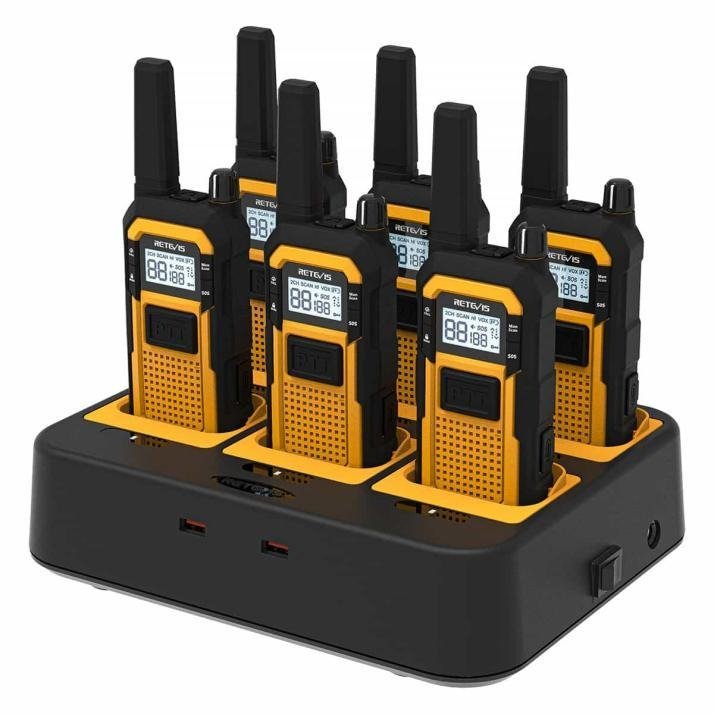
But what does a standard designed for gear that might be airdropped or mounted in a armored vehicle actually mean for a construction foreman, a warehouse manager, or an outdoor adventure guide? We decoded the technical report to translate these brutal lab trials into real-world job site and off-grid reliability.
The Test Chamber as the Ultimate Proving Ground
The official MIL-STD-810H certification, conducted by an accredited lab like GRG Metrology & Test, puts devices through a gauntlet that simulates years of worst-case-scenario abuse in a matter of weeks. For RETEVIS Industrial Two Way Radios, the testing highlights include:
Procedure I – Low-Pressure Operation: The radios functioned normally at an atmospheric pressure equivalent to 15,000 feet of altitude. Real-World Translation: Reliable performance for high-altitude mining, mountain rescue, or aviation ground operations.
Procedure I – Temperature Shock: Units were violently cycled four times between a -40°C (-40°F) deep freeze and a +85°C (185°F) oven in under a minute per transition. Real-World Translation: The radio won’t fail when moved from a freezer warehouse to a sun-baked refinery pipeline or left in a truck overnight in a prairie winter.
Procedure I – Immersion: Submerged in 1 meter of water for 30 minutes. Real-World Translation: It survives being dropped in a mud puddle, used in a torrential downpour, or rinsed off after a dusty shift.
Procedure I & II – Blowing Dust & Sand: Subjected to high-velocity dust and sand storms for multiple hours. Real-World Translation: Internal components stay protected in the abrasive, particulate-filled air of a demolition site, desert oil field, or grain handling facility.
Procedure I & V, VI – Shock and Vibration: Endured repeated 40G and 75G mechanical shock pulses and hours of variable-frequency vibration. Real-World Translation: They withstand the constant jolts inside a heavy machinery cab, the rattling on a forklift, or the impacts from accidental drops on concrete.
“The goal isn’t to create an indestructible brick, but a highly functional tool that is predictably reliable,” explains a RETEVIS engineer. “We design our RETEVIS Industrial Two Way Radios to pass these specific tests because they are a proxy for real-world extremes. If our radios work here, we have high confidence they’ll work for years on a demanding worksite or outdoor expedition.”
Beyond the Battlefield: From Military Spec to “Industrial-Grade” Clarity
This hardware-level toughness is foundational to RETEVIS’s 2026 brand promise: “The Signal Never Drops.” The company is leveraging this engineering credibility to do more than just sell radios; it’s aiming to educate the market. This effort includes the recent release of an “Industrial Wireless Communications Reliability Standard Guide,” a public whitepaper that breaks down device reliability into three clear, actionable tiers.
“Passing MIL-STD-810H is our internal benchmark and the origin of our product’s reliability,” the engineer states. “The public-facing standard is how we help customers choose. Does a campground manager need the same radio as an offshore oil rig mechanic? Probably not. Now there’s a clear framework to understand that difference and select the appropriate RETEVIS Industrial Two Way Radio for the task.”
Why This Matters for Professionals and Outdoor Workers
For businesses, this proven resilience translates directly to lower total cost of ownership (fewer replacements), reduced downtime, and enhanced safety compliance. For expanding user groups like family adventure teams, backcountry hikers, or event organizers, it means trustworthy communication when there’s no cellular signal and conditions get rough.
This move represents a significant shift in a market saturated with buzzwords. By open-sourcing its engineering philosophy and using objectively verified military testing as a baseline, RETEVIS challenges the entire industry to elevate its standards. In environments where a dropped signal means more than static—it could mean a missed safety warning, a delayed critical shipment, or a stranded hiker—this level of transparency and proven performance is becoming essential.
Where to Get the Tested Reliable Comms Gear:
For professionals and prepared individuals seeking this level of verified durability, the RETEVIS RB48 series Industrial Two Way Radios are available for purchase. You can find the latest models and kits on RETEVIS Official Amazon Storefront.
-
 Tech2 years ago
Custom Automotive Parts: Why 5-Axis Machining is the Future
-
Blog1 year ago
Save up to 40% this Prime Day 2025 — Proscenic’s summer-ready vacuums start at just £99
-
 News2 years ago
What Does Senior Home Care Include? A Complete Breakdown
-
 Lifestyle3 years ago
Popular People: Who They Are and Why They Matter
-
 Blog2 years ago
Luxury Denim and Avant-Garde Designs: Discover JUUN.J and Designer Jeans
-
 Music2 years ago
Discover Free Music Downloads on Tubidy: A Comprehensive Guide
-
 Entertainment2 years ago
The Captivating World of luѕт оf тне Dеаd 2
-

 Technology4 years ago
Find incredible discounts on top MagSafe chargers this Black Friday 2023!